
What is a shade sail and how does it work?
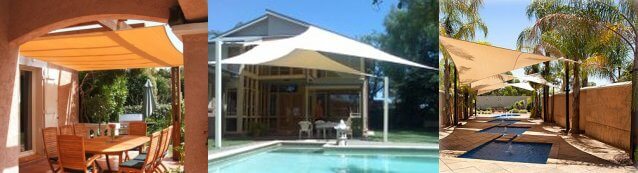
Why choose a shade sail for your garden or patio?
A quality shade sail does much more than create a patch of shade. It helps reduce direct UV exposure, improves outdoor comfort on sunny days and gives patios, balconies and gardens a cleaner, more contemporary look.
Not all shade sails are the same. Two new products can look almost identical in a photograph — and even on a quick inspection — while the quality of the fabric, real UV performance and expected service life may be very different. That is why it pays to look beyond appearance and price and compare evidence you can actually verify.
With breathable fabric, proper tension and a well-planned installation, a shade sail offers a lighter and more elegant solution than many traditional forms of garden shading.
The key benefits of a shade sail
|
UV protection
Coolaroo shade sails offer up to 95% UV protection depending on the range, with long-lasting UV protection built into the core of every fibre of the fabric.
|
Summer comfort
Breathable fabric encourages airflow and helps reduce the feeling of trapped heat beneath the sail.
|
Modern appearance
A well-tensioned shade sail gives patios, balconies, gardens and outdoor seating areas a lighter, more architectural look.
|
Flexible installation
Walls, pergolas, facades and dedicated posts can all be used to support a suitable shade sail layout.
|
What is a shade sail?A shade sail is a technical fabric membrane tensioned between fixing points at its corners. Its shape and tension create a stable shaded area that feels more structured and visually refined than a simple movable shade product. Today, shade sails are used in residential and professional settings alike, protecting patios, dining areas, balconies, gardens, poolside spaces, play zones and outdoor waiting areas. |
Not all shade sails offer the same qualityIt can be surprisingly difficult to distinguish an excellent shade sail from a much more basic product from a photograph or a quick inspection. When new, two sails can have very similar colour, shape and finish while differing substantially in fabric quality, UV performance, reinforcement and long-term durability. That is why a serious comparison should not rely on appearance, touch or price alone. Look for evidence that can be checked: fabric type and quality, documented UV protection, manufacturer track record, warranty length, corner construction and fixing quality. These are the things that reveal differences that may be almost invisible when the sails are new. |
Heavier fabric does not automatically mean better qualityFabric weight in g/m² is useful technical information, but it is not a quality score on its own. A heavier fabric can feel reassuringly substantial without automatically proving better UV protection, greater durability or better engineering. Equally, a lighter fabric can be deliberately engineered to deliver the required performance with less unnecessary weight and therefore less unnecessary load on the sail, fittings and fixing points. How the UV protection is achieved matters too. Some outdoor fabrics can use surface-applied treatments or coatings to contribute to their UV performance. With Coolaroo, long-lasting UV protection is built into the core of every fibre of the fabric. It is therefore part of the engineered material itself rather than simply relying on a layer applied to the surface. Coolaroo also matches the fabric specification to the job. For smaller residential Everyday sails, the aim is an efficient, relatively lightweight technical fabric without adding unnecessary weight to the installation. For the more demanding Commercial and DualShade ranges, Coolaroo uses substantially heavier-duty fabrics where larger spans and applications require additional strength. The right fabric is therefore not necessarily the heaviest fabric — it is the fabric engineered for the job. Breathable fabric, UV protection and summer comfortQuality shade sails often use breathable knitted HDPE fabric. This type of material allows air to move through the sail, helps heat escape upwards and makes the shaded zone more comfortable to use. This matters especially in warmer weather. Shade alone is not always enough if hot air remains trapped underneath. A breathable sail can make a noticeable difference to the comfort of a dining area, seating space or family garden. Coolaroo shade sails offer up to 95% UV protection depending on the range. Long-lasting UV protection is built into the core of every fibre of the fabric, and Coolaroo shade sails are approved by Cancer Council Australia. |
Available shapes: triangular, square or rectangularModern shade sails continue a simple idea that has been used for a long time: a tensioned fabric can create a more comfortable zone of shade outdoors.
A square or rectangular shade sail is usually better suited to larger areas such as family patios, garden seating zones or outdoor dining spaces, offering a more structured pattern of shade. |
Historical inspiration

|
Installation: tension, fall and fixings
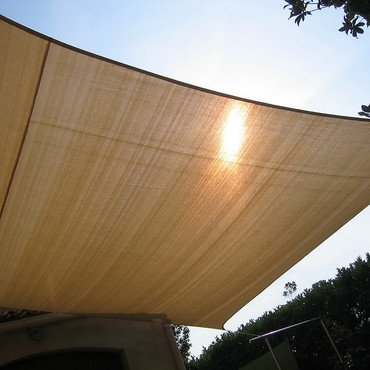
A shade sail needs to be properly tensioned in order to look right and perform well. That tension improves stability, appearance and long-term durability.
It is also important to allow a fall between the fixing points. This slope helps rainwater run away and reduces the risk of water pooling on the fabric.
Use suitable components: turnbuckles, snap hooks, pad eyes, eye anchors and other marine-grade 316 stainless steel fixings. The supporting structure and anchor points must be suitable for the loads imposed by the sail.
|
An ideal solution for patio, balcony or gardenOn a patio, a shade sail can protect a table, an outdoor lounge or a dining zone. On a balcony, it can create more useful shade without making the space feel visually heavy. In a garden, it can help define a seating area, play space or poolside zone, combining practical comfort with a clear design improvement. |
Durability and maintenance
Coolaroo fabrics are designed for durable outdoor use. Depending on the range, the manufacturer’s fabric warranty against UV degradation is 5–15 years, subject to Coolaroo warranty conditions.
Maintenance is usually straightforward: rinsing with water, gentle cleaning if needed, and checking the tension and fixings from time to time will help keep the system looking and working well.
How to choose the right shade sail in the UK
The right choice starts with the real purpose of the space: outdoor dining, relaxing, protecting a specific part of the patio or simply improving overall comfort. After that, consider the sun path, the available fixing points and the most suitable shape.
The sail must be smaller than the distance between its anchor points so there is room for the fixings and tensioning. As a practical guide, standard configurations generally require about 280–365 mm at each corner; the actual allowance must suit the sail, fixings, supports and project.
A more elegant way to create useful shade
A well-chosen shade sail improves comfort, supports UV protection and gives a patio or garden a more modern finish. It is a simple, effective and visually attractive solution for many outdoor projects across the country.
