
Shade sails in wind and bad weather: tension, anchoring and installation
A shade sail on an exposed patio, garden or commercial site should be planned as a complete system: breathable fabric, an appropriate sail area, firm even tension, robust fittings and structurally suitable anchor points.
Coolaroo shade sails use breathable knitted HDPE that allows air and heat to circulate through the fabric. This makes them particularly well suited to solar shade, but wind and winter weather still need to be considered when planning the installation.
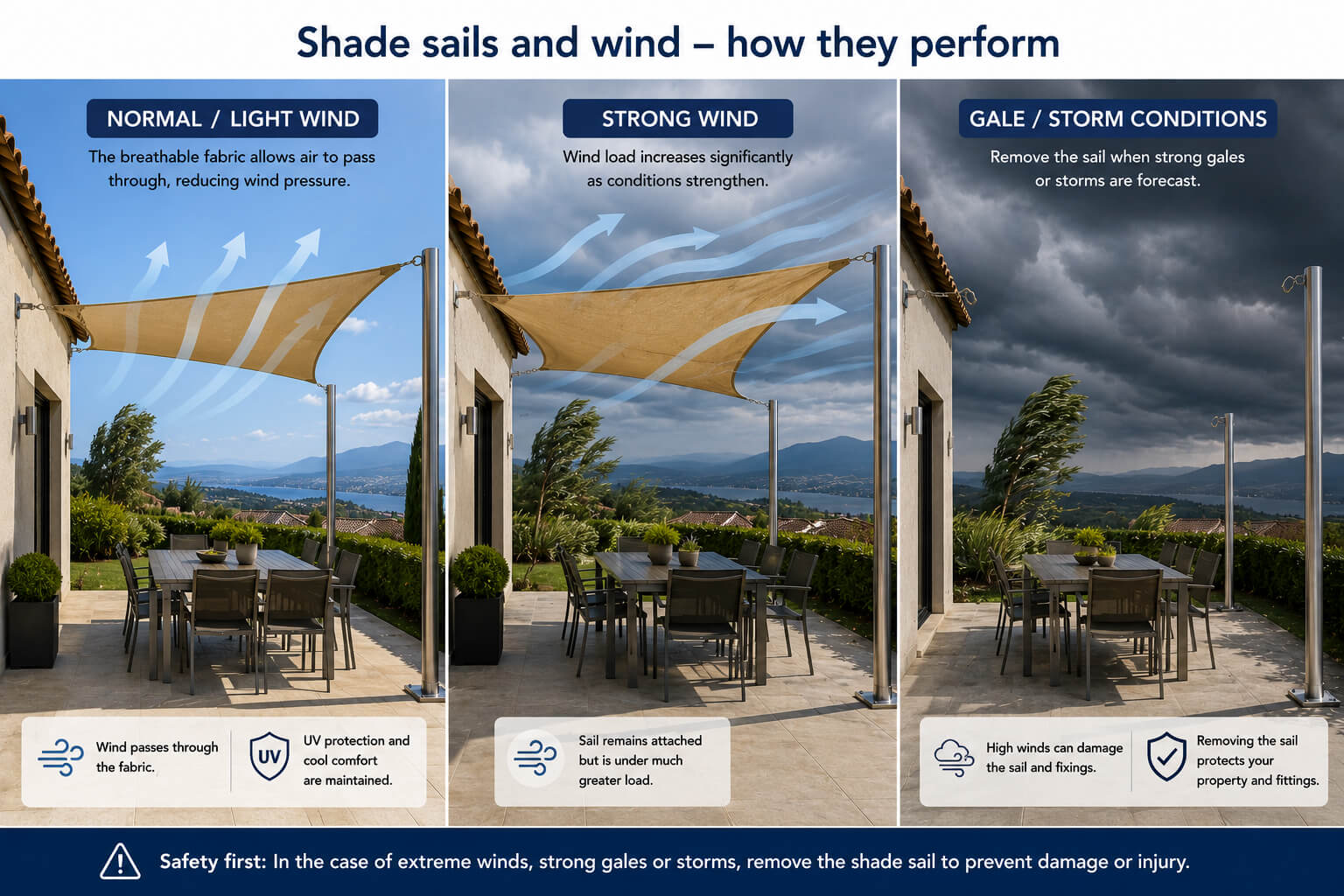
How does a breathable shade sail behave in wind?
In normal to moderate conditions, some air can pass through the knitted HDPE structure. The sail therefore does not behave exactly like a completely closed waterproof sheet, although it will still transmit increasing loads to its supports as the wind strengthens.
Firm tension, appropriate sail size and strong anchor points all matter. In exceptionally strong winds, severe gusts or an approaching storm, remove the sail when it is safe to do so.
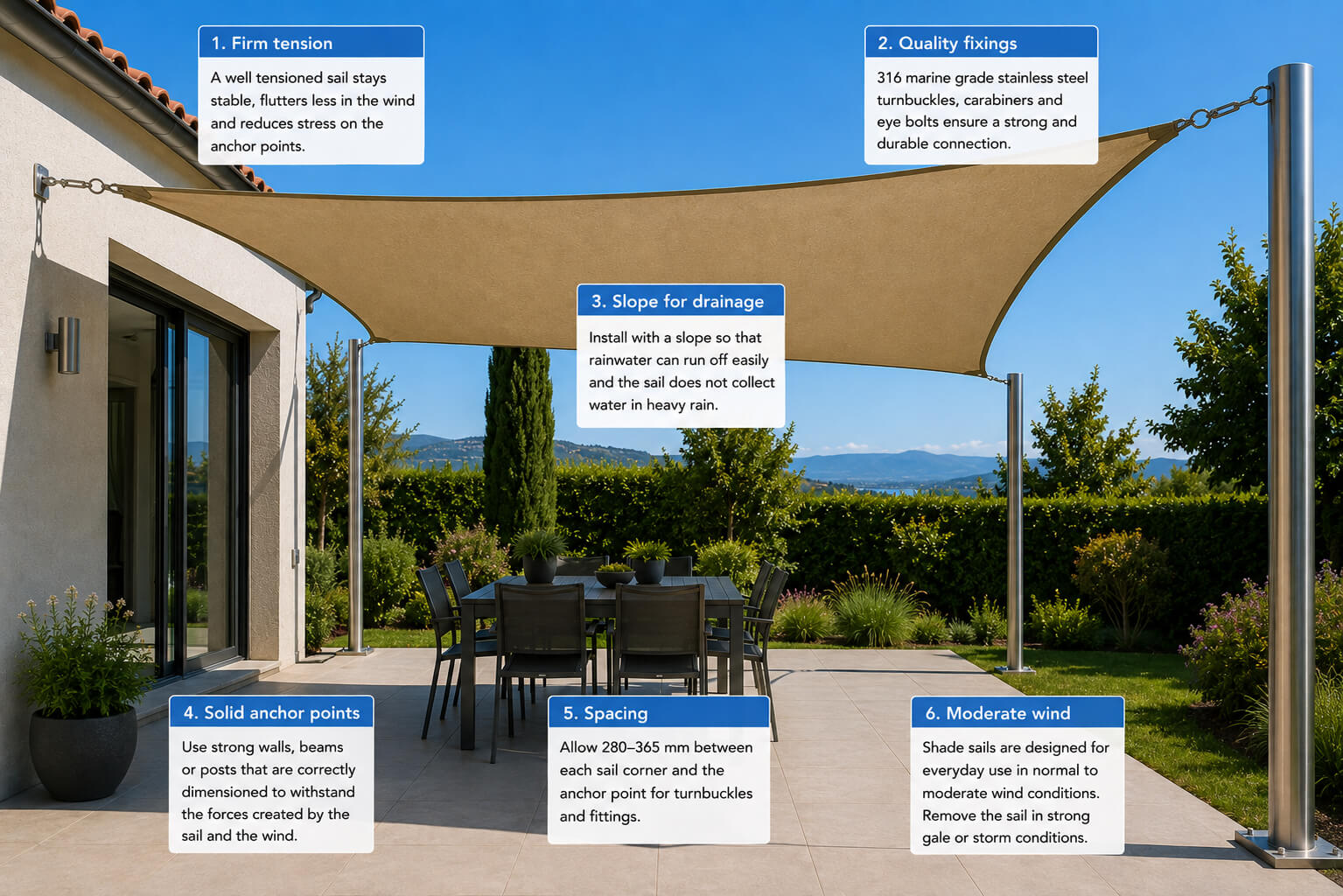
Four essentials for a more exposed shade-sail installation
Breathable fabric
Knitted Coolaroo HDPE allows air to circulate through the fabric and lets warm air escape from beneath the shaded area.
Firm tension
A properly tensioned sail holds its intended geometry better. A loose sail moves more and can load its anchor points unevenly.
Appropriate sail area
The larger the exposed sail, the greater the potential demands on the supporting structure.
Strong anchor points
Walls, beams, steelwork and posts must be structurally suitable for the forces generated by a tensioned shade sail.
Why breathable knitted HDPE matters
Coolaroo knitted HDPE is designed for shade and airflow. Its open construction allows air through while helping heat escape from the area beneath the sail.
A closed waterproof membrane serves a different purpose. It intercepts more airflow and requires careful slope and drainage to prevent water collecting.
Breathable or waterproof? →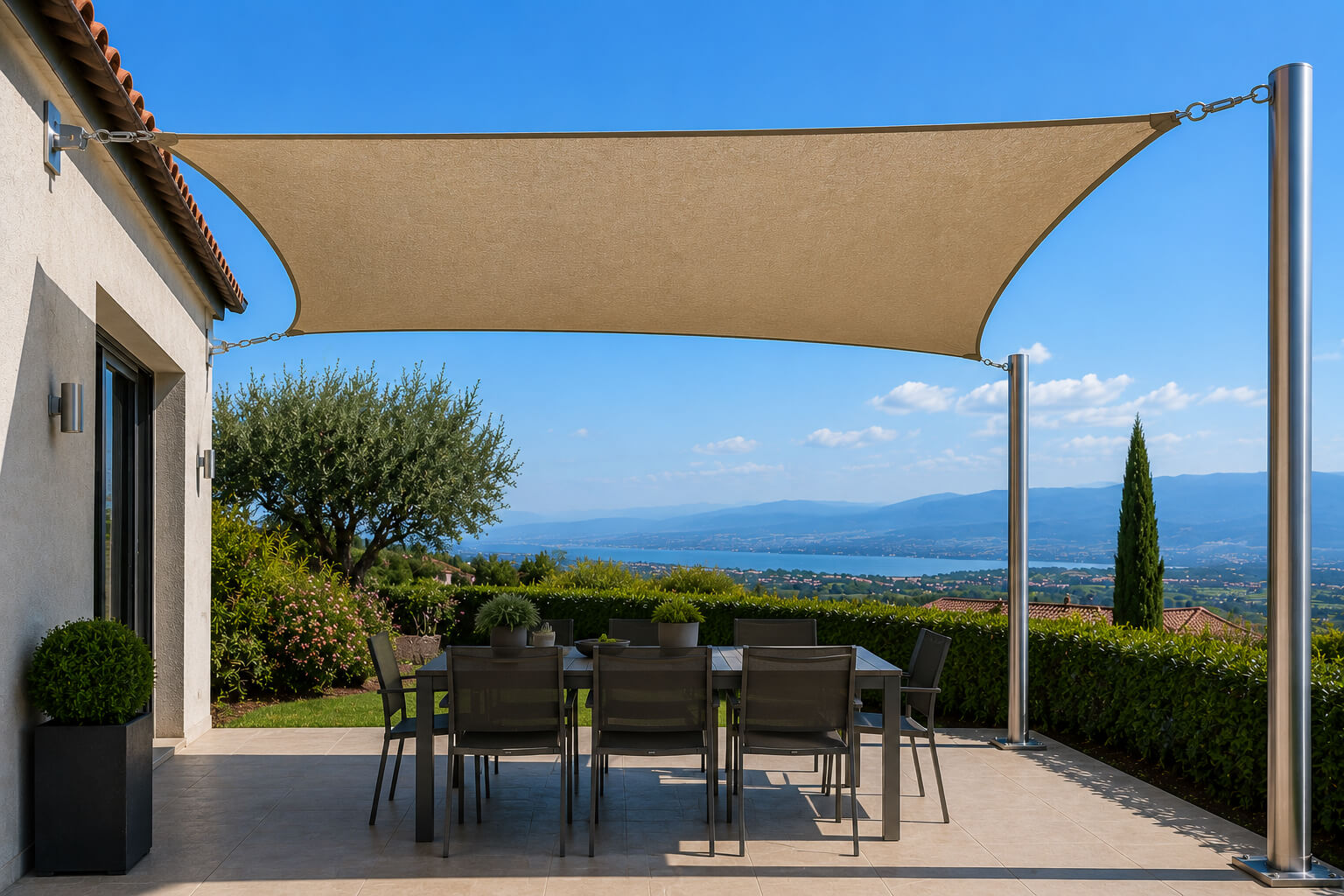
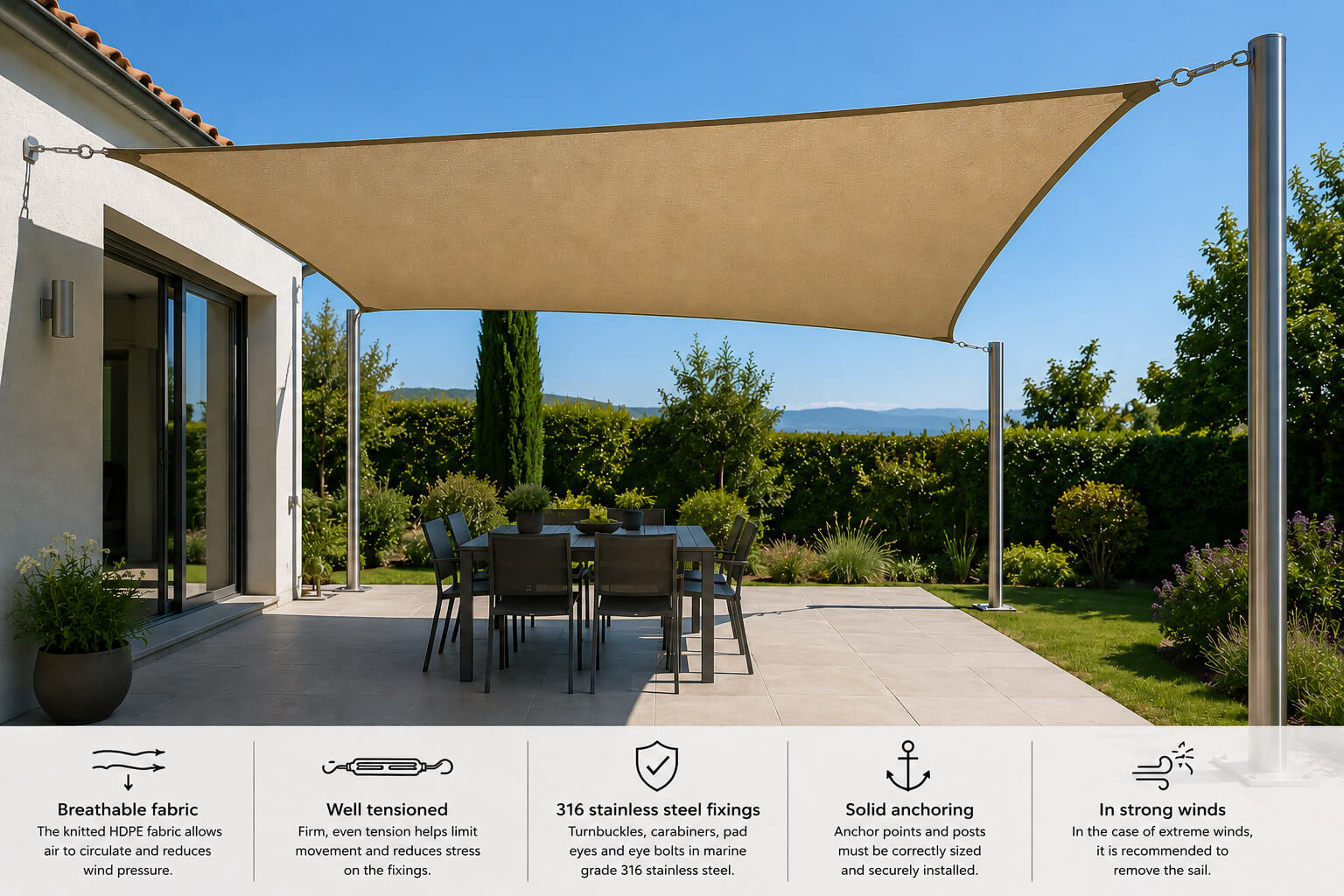
Allow for tension, slope and the fixing hardware
A shade sail should be firmly and evenly tensioned between every anchor point. Correct tension reduces unnecessary movement and helps distribute loads more consistently.
With our standard fixing sets, normally allow 280–365 mm between each sail corner and its anchor point. This provides space for the turnbuckle, snap hook and fixing as well as adjustment.
Our kits use marine-grade 316 stainless steel. Good hardware can never compensate for an inadequate wall, post, beam or structural anchor.
Which Coolaroo range is best for a more demanding location?
Consider exposure together with sail area, intended use and the supporting structure. A stronger sail is not a substitute for properly designed anchor points.
Everyday
The versatile range for normal patios and gardens, with a 5-year warranty and long-lasting UV protection built into the core of every fibre of the fabric.
Commercial
Our natural choice for larger terraces, schools, professional spaces and more demanding or exposed installations, with warranties of up to 15 years.
DualShade
Commercial-level performance with distinctive two-tone fabric and warranties of up to 15 years.
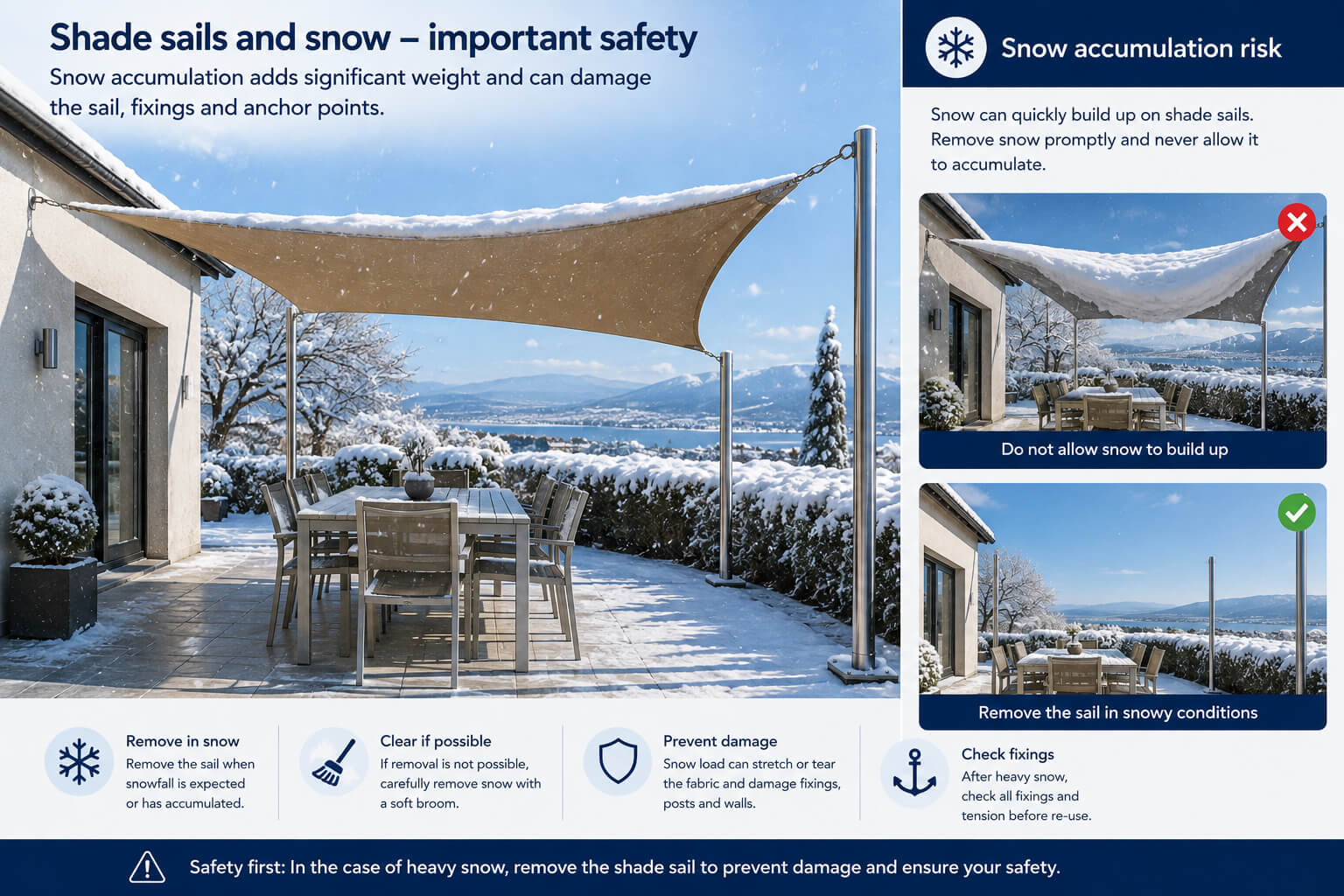
Snow: avoid allowing weight to accumulate on the sail
Snow creates a different load from wind. Accumulation adds static weight to the sail, fittings, posts and structural anchors, with wet snow becoming particularly heavy.
Remove the sail before significant snowfall and do not allow substantial snow to build up on an installed shade sail.
After severe winter weather, inspect fittings, tensioning components and anchor points before putting the sail back into service.
When should a shade sail be taken down?
Exceptionally strong winds, storms, heavy snow and other conditions beyond normal use are reasons to remove the sail when it can be done safely.
A robust shade-sail installation is a complete system
Breathable fabric, correct tension, marine-grade 316 stainless fittings and strong structural anchors all work together. The sail itself is only one part of the installation.
Shape and exposed area matter too
Triangles use three anchor points and offer flexible layouts. Squares and rectangles provide more continuous shade but also present a larger area to the wind.
Plan the anchor points before choosing the final sail size
Identify suitable structural supports, allow enough room for tensioning and then choose the shape, size and Coolaroo range that best fit the site.
