
Shade sails for pergolas
A Coolaroo shade sail can complement an existing pergola when the fixing points are sufficiently strong, correctly positioned and suitable for the tension required by the sail.
The knitted, breathable HDPE fabric creates shade while allowing air to circulate. This makes a shade sail an attractive alternative to a fully closed pergola covering when sun protection is the priority.
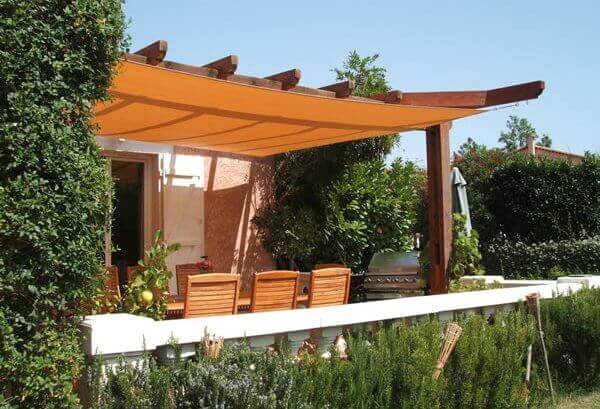
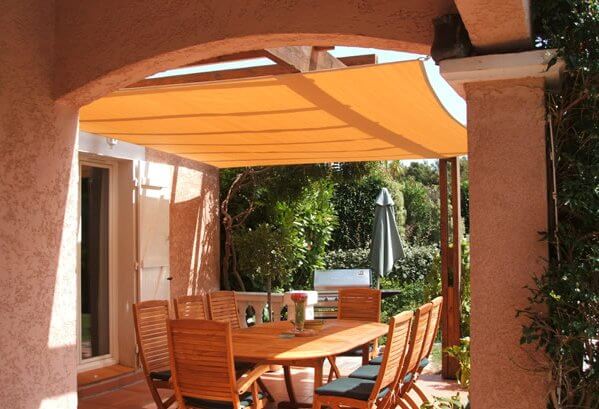
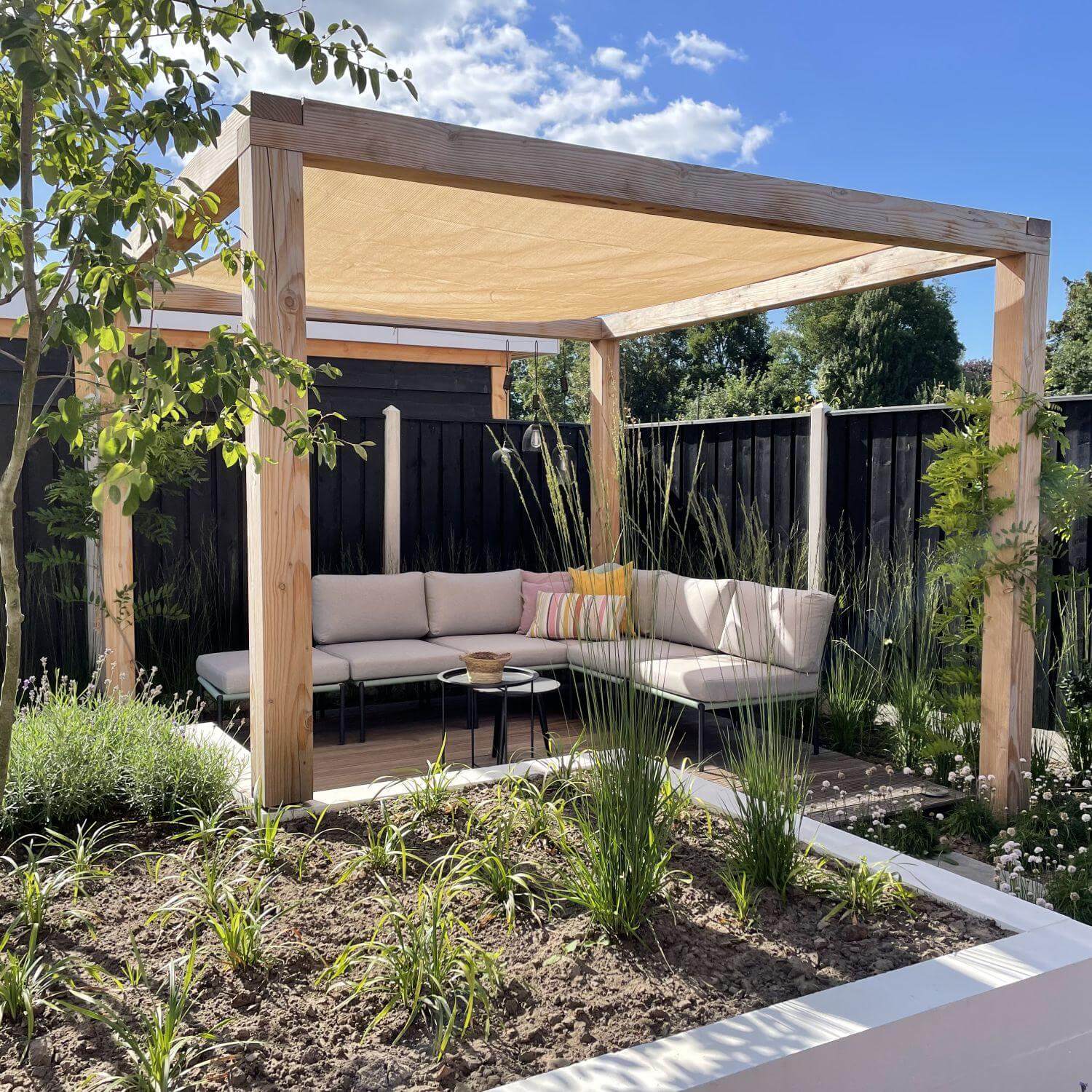
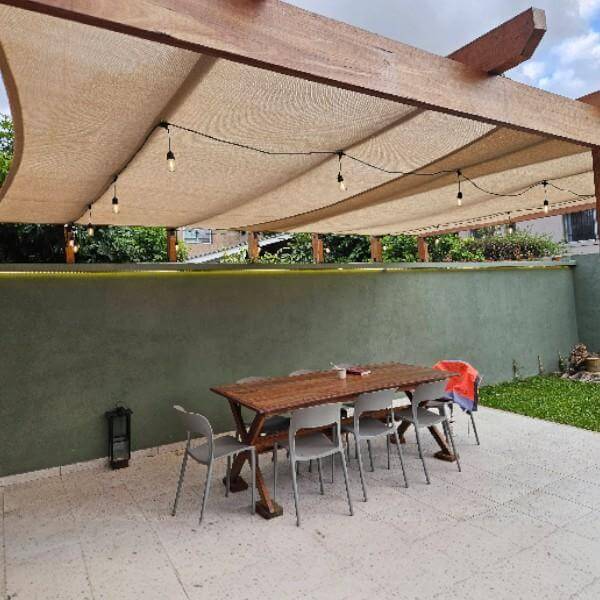
Why use a shade sail on a pergola?
An existing pergola already provides a structure within or above which a practical shaded area can often be created. A tensioned shade sail retains the open character of the pergola while protecting a patio, seating area or dining space from direct sun.
Coolaroo shade sails are made from knitted, breathable HDPE. Air can circulate through the fabric rather than becoming trapped beneath a completely closed covering.
Depending on the range, Coolaroo shade sails provide up to 95% UV protection, with long-lasting UV protection built into the core of every fibre of the fabric. Coolaroo shade sails are also approved by Cancer Council Australia.
Breathable HDPE
The knitted fabric allows air to circulate and is particularly suited to open patios, seating areas and pergolas.
Standard sizes
A well-chosen standard size can provide a simple and economical way to shade an existing pergola and also makes future replacement easier.
316 stainless steel
Our fixing kits use marine-grade 316 stainless-steel components to provide safe, adjustable tension for the shade sail.
Avoid rubbing
The tensioned sail should have adequate clearance and should not repeatedly rub against beams, walls, posts or other parts of the pergola.
What size shade sail fits my pergola?
The shade sail should not normally match the inside or outside dimensions of the pergola exactly. Sufficient space must remain between the sail corners and anchor points for turnbuckles, snap hooks and other connecting components.
With our standard fixing systems, around 280 to 365 mm per corner should normally be allowed between the shade sail and anchor point. Where an anchor point is further away, a correctly sized stainless-steel chain or cable may be used to complete the connection where appropriate.
A slightly smaller standard sail can therefore fit much better than a sail that almost fills the pergola but leaves insufficient room for correct tensioning.
Rain, slope and breathable fabric
Breathable Coolaroo HDPE shade sails are not waterproof roofs. They are designed primarily to provide shade and UV protection.
The shade sail should not be installed completely flat. Different fixing heights, or a slight twist where appropriate to the installation, help water drain and reduce the risk of pooling.
Avoid contact with the pergola structure
A tensioned shade sail can move in the wind. Repeated rubbing against a beam, wall, post or pergola edge can damage the fabric. Allow adequate clearance around the sail.
An existing pergola can simplify installation
Where the pergola already provides suitable anchor points for the three or four corners of the chosen sail, it may reduce the need for additional posts or other supports. The existing structure must still be sufficiently strong, and slope and tensioning space must also be considered. If there is any doubt about the pergola’s ability to withstand the loads, have the structure assessed by a suitably qualified professional.
Which fixings are suitable for a pergola?
The appropriate fixing depends on the material and construction of the pergola. Depending on the anchor point, our fixing kits use marine-grade 316 stainless-steel turnbuckles, snap hooks, pad eyes or eye anchors.
Good-quality hardware does not replace checking the pergola itself. Each anchor point must suit the supporting material and be capable of carrying the forces transmitted by a tensioned shade sail.
Choose the right shade sail for your pergola
Compare the available Coolaroo shade sails by shape, size, colour and range. Everyday, Premium, Extreme, Commercial and DualShade provide different options for patios and pergolas. Then check the available tensioning space and anchor points before choosing the size.
